
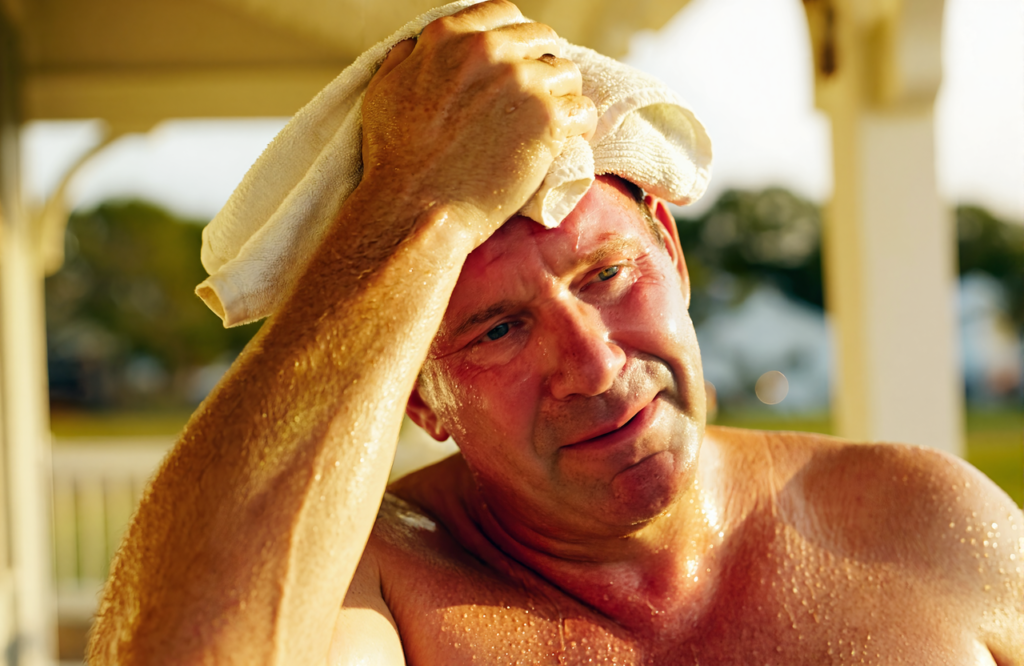
When the Jackson County heat index climbs past 105 degrees, knowing the difference between heat exhaustion and heat stroke can save a life. Here’s the quick version: heat exhaustion makes you sweat hard with cool, clammy skin while you stay alert. Heat stroke is a medical emergency where the body runs above 103 degrees Fahrenheit, the skin turns hot and red, sweating can stop, and the person gets confused or passes out. If you see those heat stroke signs, call 911 right away.
Summer on the Mississippi Gulf Coast is no joke. Between the humidity off the Mississippi Sound, long days outdoors fishing or working in the yard, and shift work at places like the Pascagoula shipyards, folks here push through heat that would flatten people in drier climates. This guide walks you through how to spot each condition, what to do, and when to get checked out.
What’s the difference between heat exhaustion and heat stroke?
Heat exhaustion and heat stroke sit on the same ladder, but they’re not the same rung. Heat exhaustion is your body struggling to cool itself: you sweat heavily, your skin feels cool and clammy, your pulse runs fast and weak, and you might feel dizzy, nauseous, or get a headache. You’re uncomfortable, but you’re still thinking clearly. Heat stroke is the dangerous one, where your cooling system has failed and your core temperature spikes. According to the CDC, that’s a body temperature of 103 degrees Fahrenheit or higher, with hot, red, dry or damp skin and confusion.
Here’s a side by side look at the signs:
What are the warning signs of heat stroke?
Heat stroke is a 911 emergency, and the signs come on fast. Per the CDC, watch for these:
- A body temperature of 103 degrees Fahrenheit or higher
- Hot, red skin that’s dry or damp
- A fast, strong pulse
- A throbbing headache, dizziness, or nausea
- Confusion or slurred speech
- Fainting or loss of consciousness
If someone shows these signs, call 911, move them somewhere cooler, and start cooling them with wet cloths or a cool bath. The CDC says not to give fluids to someone who is confused or unconscious, since they could choke.
Can heat exhaustion turn into heat stroke?
Yes, and that’s exactly why heat exhaustion deserves your attention. Left untreated, heat exhaustion can progress to heat stroke, so the smart move is to act early. The CDC advises getting medical help if the symptoms of heat exhaustion get worse or last longer than an hour, or if the person is vomiting. Don’t wait it out in the heat hoping it passes. Cool down first, then decide whether you need to be seen.
How do you treat heat exhaustion at home?
Most cases of heat exhaustion respond to quick, simple steps. The CDC recommends moving to a cooler, air conditioned spot, loosening tight clothing, and putting cool, wet cloths on your body or sitting in a cool bath. Sip water slowly. Stop what you were doing and rest. If you start feeling better, good, but keep taking it easy for the rest of the day and stay out of the heat.
Get medical care if the symptoms last longer than an hour, you keep vomiting, or you just aren’t bouncing back. Dehydration that won’t budge with sips of water is a common reason people on the Coast end up needing more help, and that’s a good time to walk in and get checked.
Should you go to urgent care or the ER for heat illness?
It depends on which signs you’re seeing. Here’s a simple way to think about it:
- Handle it at home: mild heat exhaustion or heat cramps that ease up once you cool down, rest, and drink water.
- Walk in to urgent care: heat exhaustion that isn’t improving, ongoing nausea or vomiting, or dehydration that sips of water aren’t fixing. A walk-in clinic can check you over and give IV fluids to help you rehydrate when sipping water isn’t cutting it.
- Call 911 or go to the ER: any sign of heat stroke, like confusion, hot dry skin, a temperature of 103 degrees or higher, fainting, or a seizure. This is an emergency, so don’t drive yourself.
Total Health urgent care sits right on Hwy 57 in Vancleave and is open 7 days a week from 7am to 7pm, including weekends, so you don’t have to wait for Monday when the heat catches up with you on a Saturday afternoon. Walk-ins are welcome, no appointment needed. For dehydration, the clinic offers IV fluids on site, including the Hydration Help drip built for exactly this: too much time in the Gulf Coast heat, working outdoors, or just running low. IV hydration delivers fluids directly, and you can be evaluated at the same time to make sure nothing more serious is going on. If you need it, an X-ray and lab work are available in the same visit too.

Why does Gulf Coast humidity make heat illness worse?
Humidity is the hidden danger here, and it’s why the Coast feels so much hotter than the thermometer reads. Your body cools itself by sweating, but when the air is already thick with moisture, that sweat can’t evaporate, so the cooling doesn’t work. The National Weather Service captures this with the heat index, the temperature it actually feels like once you factor in humidity. At 90 degrees with 70 percent humidity, it feels like 105 degrees. Stand in full sun and the heat index can climb another 15 degrees on top of that.
During a Gulf Coast summer, the heat index regularly pushes into the 105 to 110 degree range, and the NWS New Orleans office, which covers coastal Jackson County, issues a Heat Advisory once it hits around 105. That’s the kind of heat that turns a routine afternoon on the water or in the yard into a real risk, even for people who feel fit and used to it.
Who’s most at risk for heat illness on the Coast?
Anyone can get sick in extreme heat, but some folks need extra watching. The CDC lists higher risk groups including infants and young children, adults 65 and older, people with chronic conditions like heart disease, pregnant women, and anyone working or exercising outdoors. That covers a lot of people around here, from kids at summer sports in Gautier and Ocean Springs to crews working long shifts at the shipyards in Pascagoula to anglers out on the Pascagoula River.
A few prevention basics go a long way: drink water before you’re thirsty, take breaks in the shade or AC, save heavy outdoor work for the cooler morning hours, wear light clothing, and check on older neighbors and anyone without air conditioning. Never leave a child or pet in a parked car, even for a minute. And keep an eye on each other when you’re outside, since the person overheating is often the last to notice.
Frequently asked questions
With prompt cooling and rest, many people start feeling better fairly quickly, but everyone recovers at their own pace, and it’s normal to feel wiped out for the rest of the day. The key rule from the CDC: if your symptoms last longer than an hour, get worse, or come with vomiting, it’s time to seek medical care rather than keep waiting.
The CDC puts the threshold at a body temperature of 103 degrees Fahrenheit or higher, paired with hot skin and confusion. Heat stroke can drive the temperature even higher very fast, which is why it’s a 911 emergency and not something to manage at home.
Yes. Total Health Urgent Care offers IV fluids on site to rehydrate you when sipping water isn’t enough, including a Hydration Help drip aimed at heat and outdoor exertion. IV hydration delivers fluids directly, and you can be evaluated at the same time to make sure nothing more serious is going on.
Move them out of the heat into shade or air conditioning, loosen tight clothing, and apply cool, wet cloths or have them sit in a cool bath. For heat exhaustion, let them sip water. For suspected heat stroke, call 911 first and keep cooling them, but don’t give fluids to anyone who is confused or unconscious.
Total Health Urgent Care publishes its self-pay prices up front: a self-pay office visit is $130, and an X-ray is $75. The clinic also accepts most major insurance and bills the insurance companies directly. You can call ahead at (228) 283-5045 with any questions about cost.
Yes. Unlike heat exhaustion, which you can often manage by cooling down, heat stroke is always a medical emergency because the body’s temperature control has failed. Call 911 immediately if you spot the signs.
This article was prepared by the Total Health Urgent Care team; founded by Jennifer Duncan, APRN, MSN, FNP-C. It’s for general education and isn’t a substitute for medical care. For a medical emergency, call 911. Total Health Urgent Care, 12000 Hwy 57, Vancleave, MS 39565, (228) 283-5045, open 7 days a week, 7am to 7pm.