

Does urgent care do STD testing? Yes, and here in Vancleave, right on Hwy 57, Total Health Urgent Care handles it as a walk-in visit. Our STD testing covers evaluation and treatment, with samples collected right here in the clinic and sent off to a lab for results. We see patients every day from 7 AM until 7 PM, Saturdays and Sundays too, with no appointment required, which makes it an easy trip from Biloxi, Pascagoula, or Ocean Springs.
- What you get: a provider visit, on-site sample collection, send-off lab results, and treatment when you need it.
- Self-pay: the $130 office visit price includes your exam, referrals, and any prescriptions. Since every visit is different, phone (228) 283-5045 ahead of time for an estimate of your total.
- Insurance: most major plans are accepted, and we bill your insurer directly.
- Emergencies: if you’re dealing with sudden severe pain or fainting, skip the wait and head to the ER. For a medical emergency, call 911.
Why is STD testing such a big deal in Mississippi?
Mississippi’s STI rates rank among the highest in the country, and many of these infections never cause symptoms. In an April 14, 2026 release, the Mississippi State Department of Health put it bluntly: “Mississippi has one of the highest rates of sexually transmitted infections (STI) in the nation.” The CDC’s 2023 state ranking tables placed Mississippi second in the U.S. for chlamydia, at 700.9 reported cases per 100,000 people.
There’s good news mixed in. The same release, showing changes from 2024 through 2025, lists a 21.9% decrease in syphilis and a 48% decrease in syphilis among newborns, while chlamydia rose 2.4%. MSDH also points out that STIs “are often preventable and treatable.” Here’s the problem: most of these infections are silent. The CDC’s page on getting tested for STIs warns that “STIs often have no symptoms, so you may not know you have one.”
What STD testing can you get at urgent care in Vancleave?
At Total Health Urgent Care, STD testing means talking with a provider, giving a sample here in the clinic, and having it sent to a lab. Our urgent care services page describes it as “evaluation and treatment with on-site collection, lab capabilities for send-off results.” Treatment is part of that service too.
Which tests you’ll need depends on your history. The CDC explains that “You may need to provide blood, urine, or swabs from your vagina, throat, or rectum for STI tests.” Tell the provider what you’re worried about, and ask exactly which infections your visit will check for. The CDC encourages everyone to “Have an open and honest conversation with your healthcare provider about your sexual history and STI testing,” so don’t be shy.
A few related services live under the same roof: in-house urinalysis, on-site urine pregnancy testing with a referral to an OBGYN when needed, and on-site rapid urinalysis for painful urination. That last one matters. The CDC’s gonorrhea page notes that symptoms in women “are often mild and can be mistaken for a bladder or vaginal infection.” If burning when you pee is your main symptom, our guide to UTI symptoms and same-day treatment is worth a read too.
What are the most common STDs?
The World Health Organization’s STI fact sheet splits the most common infections into two groups: four that are currently curable (syphilis, gonorrhea, chlamydia, and trichomoniasis) and four viral infections (hepatitis B, herpes, HIV, and HPV). The CDC calls trichomoniasis, or trich, “the most common curable STI.” Here’s how the big ones compare, drawn from the CDC pages on chlamydia, gonorrhea, syphilis, trich, and herpes testing.
How often should you get tested for STDs?
It depends on your age, your partners, and whether you’re pregnant. The CDC’s Getting Tested for STIs page, last updated March 17, 2026, says everyone ages 13 to 64 should be tested for HIV at least once, and all sexually active women younger than 25 should be tested for gonorrhea and chlamydia every year.
Got symptoms, or a partner who tested positive? Don’t wait for your yearly check. The CDC’s pelvic inflammatory disease page advises, “Promptly see a doctor if you think you or your sex partner(s) have or were exposed to an STI.”
What happens at an STD testing visit?
It’s a conversation, a sample, and a plan. You check in, talk through your history with the provider, give a urine, swab, or blood sample depending on what you’re being tested for, and that sample heads off to the lab.
- Walk in. No appointment is needed. If you’re using insurance, bring your primary insurance card and your secondary card, if you have one.
- Talk it through. Share any symptoms, new partners, and the kinds of sex you’ve had. Per the CDC, people who’ve had oral or anal sex should talk with their provider about throat and rectal testing.
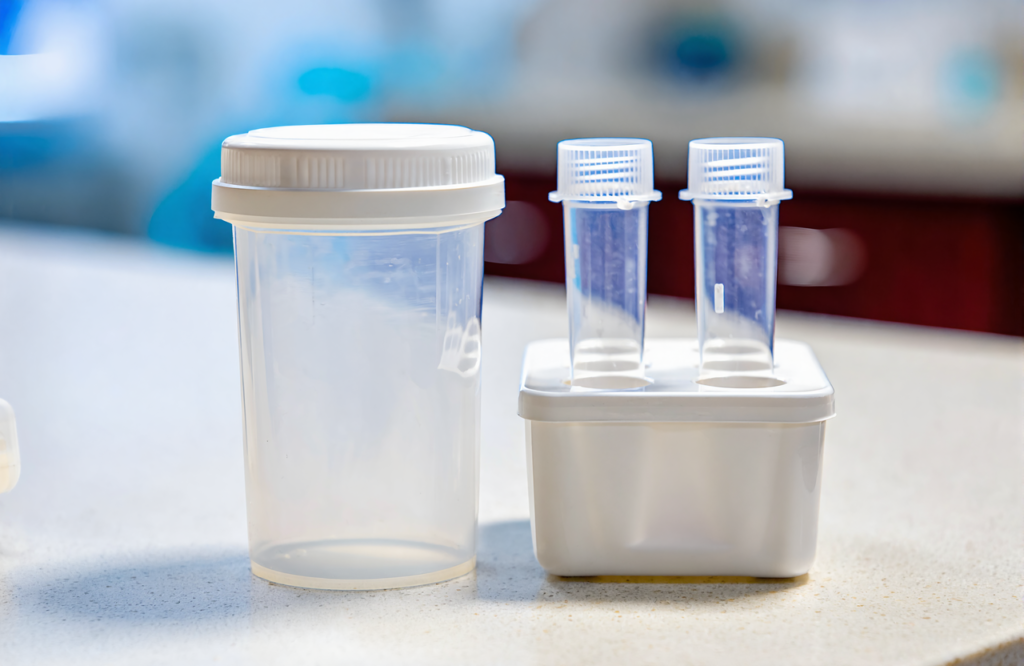
- Give the sample. MedlinePlus explains that for a urine test “you will provide a sterile sample of urine in a cup as instructed by your provider.” Swabs may come from the vagina or cervix in women, or the penis or urethra in men, and blood is drawn from a vein in your arm. One prep tip from the same page: “Women may need to avoid douches and vaginal creams for 24 hours before a urine or swab test.”
- Leave with a plan. Ask how and when you’ll hear about your lab results.
If a test comes back positive, the CDC’s chlamydia guidance is clear: “You should not have sex again until you and your sex partner(s) complete treatment.” If you’re given a single dose of medicine, the CDC says to wait seven days after taking it before having sex. Because repeat infection with chlamydia is common, the CDC also recommends testing again about three months after treatment. Partners need care too. As the CDC’s next steps after a positive test page puts it, “Just like you, your partner needs to receive medical care as soon as possible.”
How long do STD test results take?
It depends on the test and the lab. Because Total Health collects STD samples on site and sends them off to a lab, you won’t walk out with those results in hand, so ask your provider how long your specific tests usually take.
Home testing has changed, too. On March 28, 2025, the FDA granted marketing authorization to the first diagnostic test for chlamydia, gonorrhea and trichomoniasis “that can be purchased without a prescription and performed entirely at home.” It’s intended for females and delivers results in approximately 30 minutes. The FDA’s announcement is direct about what comes next: “Individuals with positive results for any of the three infections should seek medical care.” A walk-in visit is a simple way to do that.
How soon after sex should you get tested?
Testing too early can miss an infection. The CDC’s HIV testing page says “No HIV test can detect HIV immediately after infection.” A nucleic acid test (NAT) can usually detect HIV 10 to 33 days after exposure, while antibody tests can usually detect it 23 to 90 days after exposure. If you get a negative result after a possible exposure, the CDC says to get tested again after the window period for the test you took. For chlamydia, the CDC notes symptoms “may not appear until several weeks after having sex with a partner who has chlamydia,” so your provider can help you time things.
One exception to waiting: if you think you were exposed to HIV in the last three days, the CDC’s PEP guidance says to “Talk right away (within 72 hours) to your health care provider, an emergency room doctor, or an urgent care provider about PEP.” That clock matters more than any routine screening, so don’t sit on it.
Does insurance cover STD testing?
Screening often is covered. HealthCare.gov says all Marketplace health plans and many other plans must cover a list of preventive services without charging a copayment or coinsurance, even before your deductible is met, generally when an in-network provider delivers them. That list includes HIV screening for everyone 15 to 65 and syphilis screening for adults at higher risk, and the women’s list adds chlamydia screening for younger women and other women at higher risk.
Most major health insurance plans work here, and we send the bill to the carrier for you. Your plan decides the co-pay, so if you’re unsure whether a visit is covered, your insurer is the one to ask. Paying out of pocket? It’s $130 for the office visit, and our pricing and insurance page has the details.
Where can I get tested for STDs near Biloxi, Pascagoula, or Ocean Springs?
You’ve got a few routes: your regular primary care provider, a county health department clinic by appointment, an FDA-authorized home test, or a walk-in urgent care like ours. Total Health keeps the same hours all week long, 7 AM to 7 PM, Saturday and Sunday included, so if you’re searching for an urgent care near you that’s open now on a weekend afternoon, we’re here until 7.
People sometimes ask us which walk-in clinic is best for STD testing near Biloxi. Here’s our checklist: hours that match real life, no appointment required, a self-pay price you can see before you come, a clinic that isn’t a corporate chain, and the ability to treat, not just test. Here’s roughly how far we are from nearby towns, all by way of I-10 Exit 57 and north on Hwy 57.
For everything else we treat, from sprains to sore throats, see our guide to walk-in urgent care near Biloxi.
When should you skip the STD test and go to the ER?
Some symptoms can’t wait for a lab result, and if you think it’s an emergency, call 911 without waiting. Emergency physicians have a helpful list: the American College of Emergency Physicians’ Know When to Go guide lists unusual abdominal pain, fainting or sudden dizziness, and any sudden or severe pain among the warning signs that call for emergency care. Separately, MedlinePlus lists sudden severe pain in one testicle as a symptom of testicular torsion, and for that it says “It is better to go to an emergency room instead of an urgent care in case you need to have surgery right away.”
Walking in for an STD test can feel awkward. It shouldn’t. Our clinic was started by a nurse practitioner, and Jennifer Duncan, APRN, MSN, FNP-C, logged upward of 25 years across emergency and urgent care, teaching, and hospital and ER administration. Her words on our About page sum up how we see every visit: “Every person who walks through our door matters, and that shows in the care we give, seven days a week.”
Frequently asked questions
Yes. Walk-ins are welcome at our Hwy 57 clinic between 7 AM and 7 PM, seven days a week, and an appointment is never required. STD testing includes an evaluation, on-site sample collection, send-off lab results, and treatment if needed.
We don’t post a separate price for STD testing. What we do publish is a $130 self-pay office visit, which covers your exam, referrals, and prescriptions. For the full cost of your testing, call (228) 283-5045 before you come.
Usually not. At Total Health, STD samples are collected on site and sent off to a lab, so you won’t leave with those results in hand. Ask your provider how long your specific tests take.
Yes. STD testing at Total Health Urgent Care covers evaluation and treatment. According to the CDC, chlamydia, gonorrhea, and syphilis can all be cured with the right treatment, so take all of the medicine your provider gives you.
You can ask, and your provider will match the tests to your history. The CDC does not recommend herpes testing for people without symptoms in most situations, and it says HPV tests are not recommended to screen men.
It can be either one. The CDC lists a burning sensation when peeing as a symptom of both chlamydia and gonorrhea. Total Health checks painful urination and urinary tract infections with on-site rapid urinalysis and also offers STD testing, so one visit can look at both.
Biloxi is about 23 miles away, roughly a 30-minute drive. Head east on I-10 to Exit 57, then go north on Hwy 57 until you reach number 12000 in Vancleave.
Get tested this week, on your schedule
Plug 12000 Hwy 57, Vancleave, MS 39565 into your GPS. Questions first? Dial (228) 283-5045. Walk in whenever it suits you between 7 AM and 7 PM, any day of the week. We’re about 30 minutes from Biloxi and 25 to 30 minutes from Pascagoula, and our contact page has a directions link and a message form.
This STD testing guide was prepared by the Total Health Urgent Care team; founded by Jennifer Duncan, APRN, MSN, FNP-C. Please treat it as general information and talk with a provider about your own symptoms.