

How much does an EKG cost? For a routine EKG with interpretation paid in cash, the average price in Mississippi is $48, according to Sidecar Health’s Mississippi EKG price data. That figure is for the test, and Sidecar’s state-by-state EKG price table says its prices leave out the other doctor visit fees that normally go with it. The setting matters too. For people on Medicare, Medicare.gov’s EKG coverage page says that if you have the test at a hospital or a hospital-owned clinic, you also pay the hospital a copayment.
Among the diagnostic services at Total Health Urgent Care, the Hwy 57 walk-in clinic in Vancleave, you’ll see rapid on-site EKG with referral as needed. The office visit on the clinic’s self-pay pricing page is $130, with exams, referrals, and prescribing all part of that number. An EKG price isn’t listed on that page, so phone (228) 283-5045 about it before you drive over, since the clinic suggests a call for any accurate self-pay estimate.
- Cash benchmark: Sidecar Health’s Mississippi page puts the average cash price for a routine EKG at $48.
- Original Medicare: after the Part B deductible, your share is 20% of what Medicare approves, per Medicare.gov’s EKG screenings page.
- Total Health self-pay office visit: $130, which the pricing page says covers exams, referrals, and prescribing. Ask by phone for the EKG price.
- Chest pain right now? The CDC’s heart attack page says to call 9-1-1 immediately if you notice heart attack symptoms in yourself or someone else.
How much does an EKG cost without insurance?
Without insurance, you’ll usually pay two things: a cash price for the EKG and whatever the place charges for the visit around it. Sidecar Health’s Mississippi cash-price chart averages $48 for the test itself. Hospitals publish their own numbers too: under the rule explained in CMS’s hospital price transparency guide, most hospitals must post standard charges, including discounted cash prices, for at least 300 shoppable services.
Here are the published numbers side by side, each with its source.
Mississippi’s uninsured share runs above the national figure, too. America’s Health Rankings lists 9.7% of Mississippians as uninsured, based on 2024 data, against a U.S. value of 8.2%.
What’s actually on an EKG bill?
An EKG bill covers two jobs, recording your heart’s signals and reading them. The EKG code on CMS’s list of 70 hospital shoppable services, 93000, is described in CMS’s shoppable services guide as “Electrocardiogram, routine, with interpretation and report.” Billing rules can also split those jobs apart. A Medicare contractor’s EKG billing and coding article lists 93005 for a 12-lead ECG tracing and 93010 for the interpretation and report. So when you compare quotes, ask whether the reading is included, and you won’t be comparing a whole EKG against half of one.
How much does an EKG cost with insurance?
With insurance, what you pay for an EKG depends on your plan’s cost-sharing, starting with the deductible. HealthCare.gov’s glossary entry on deductibles defines a deductible as the amount you pay for covered health care services before your insurance plan starts to pay. Once you’ve paid your deductible, coinsurance is the percentage of a covered service’s cost you pay, 20% for example.
Don’t count on an EKG being one of the free preventive extras, either. HealthCare.gov’s preventive care list for adults includes blood pressure screening but not an EKG, and HealthCare.gov says the listed services are generally covered at no cost to you from an in-network provider, though $0 isn’t guaranteed in all cases. The USPSTF’s 2018 ECG screening recommendation says it “recommends against screening with resting or exercise electrocardiography (ECG) to prevent cardiovascular disease (CVD) events in asymptomatic adults at low risk of CVD events.”
Medicare works a little differently. Medicare.gov says Part B covers a routine EKG screening if your provider refers you during your one-time Welcome to Medicare preventive visit, and it also covers EKGs as diagnostic tests. For 2026, the Part B deductible is $283 before Original Medicare starts to pay.
Total Health bills the insurer directly and takes most major health insurance plans, per the clinic’s insurance and pricing page. Your insurer sets the office-visit copay, and you’ll typically find it on your insurance card. Have both cards handy at check-in, the primary and any secondary. If coverage is a question mark, the clinic’s advice is to check with your insurance company.
How much does an EKG cost at urgent care?
At an urgent care, plan on two pieces, the visit and the test, because Sidecar’s EKG cash-price figures leave out the doctor visit fees that normally accompany an EKG. At Total Health in Vancleave, the visit piece is posted: $130 self-pay, with exams, referrals, and prescribing included, and X-rays at $75 if you need one. For the EKG piece, call the clinic first, since its pricing page recommends calling beforehand to ask about out-of-pocket pricing.
Uninsured or paying on your own? Federal rules give you another tool. The CMS medical bill rights page explains that when you’re uninsured or not using insurance, providers usually have to hand over a good faith estimate of your care’s cost, either when you schedule ahead or when you ask for one. That same page says you may be able to dispute your bill if it’s at least $400 more than the estimate.
Monday through Sunday, Total Health takes walk-ins between 7 AM and 7 PM. X-ray and lab testing happen on the premises too, according to the clinic’s walk-in urgent care page. For a medical emergency, call 911. Heart attack symptoms always count as one.
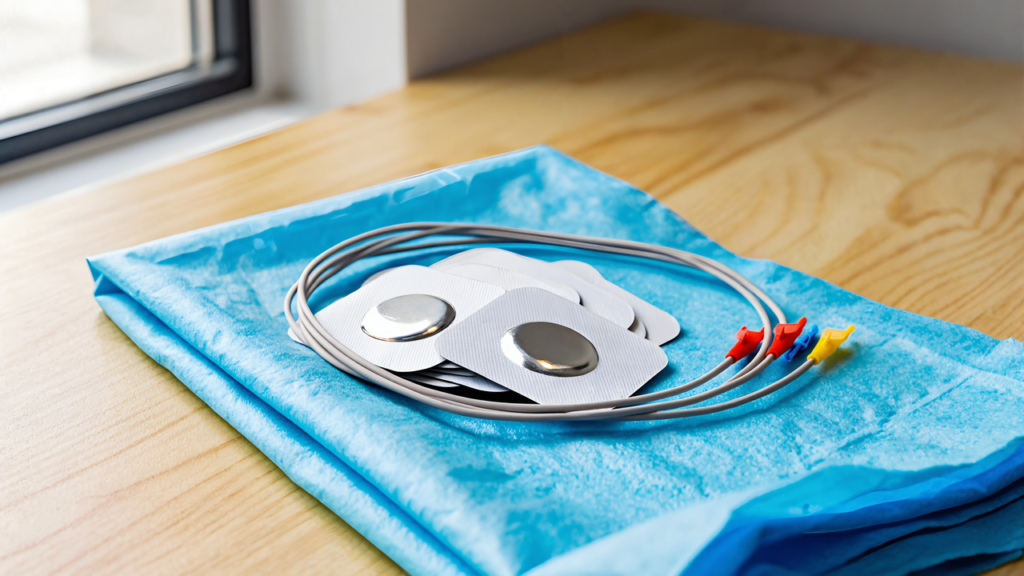
What does an EKG test include?
An EKG is a short, painless recording of your heart’s electrical activity, and most of the appointment is setup. The NHLBI’s heart tests page describes an electrocardiogram as “a simple, painless test that detects and records your heart’s electrical activity.” Cleveland Clinic’s EKG guide says it takes about 10 minutes to attach the electrodes and complete a resting EKG, while the actual recording takes only 10 seconds.
Here’s what to expect on the table:
- You lie down, and a technician cleans spots on your arms, legs, and chest and attaches small patches called electrodes, as the MedlinePlus ECG article describes.
- Skip the workout and the cold water beforehand. MedlinePlus’s ECG encyclopedia entry warns that exercising or drinking cold water immediately before an ECG may cause false results.
- Mention any medicines or supplements you’re on, because MedlinePlus’s EKG test page says some medicines can affect the accuracy of your results.
- Expect no shocks. The MedlinePlus EKG test page says the EKG doesn’t send any electricity to your body.
The NHLBI’s heart tests overview lists arrhythmias, atrial fibrillation, heart attack, heart failure, and heart valve diseases among the conditions an EKG is used for. A single EKG has limits, though. Cleveland Clinic’s electrocardiogram page explains that some heart rhythm problems only happen once in a while, so a standard EKG may not show them.
That’s also why an EKG price shouldn’t be compared with a longer heart test. A Holter monitor, MedlinePlus’s Holter monitor article explains, is worn for 24 to 48 hours during normal activity. An exercise stress test is a different visit as well, and the MedlinePlus stress test article puts its total time at around 60 minutes.
When do you need an EKG, and when is it 911?
Heart attack symptoms call for 911, not an EKG appointment, and chest pain is never a price-shopping moment. The CDC’s heart attack page lists the major symptoms as chest pain or discomfort, feeling weak, light-headed, or faint, pain or discomfort in the jaw, neck, or back, pain or discomfort in one or both arms or shoulders, and shortness of breath. MedlinePlus’s heart attack article is blunt: “DO NOT try to drive yourself to the hospital.”
A few non-emergency situations where an EKG comes up:
- Palpitations: MedlinePlus’s heart palpitations article says an electrocardiogram may be done, and its list of when to get help says to call 911 if you have a loss of alertness, chest pain, shortness of breath, unusual sweating, or dizziness or lightheadedness.
- Before surgery: a 2013 American Family Physician article on preoperative testing guidelines states that patients undergoing low-risk surgery do not require electrocardiography, so ask your surgeon’s office what it actually needs.
- Pilot medicals: the FAA’s ECG requirement guide for medical examiners says first-class applicants need a single baseline ECG at the first exam performed after reaching their 35th birthday, and an ECG annually once they’re 40 or older.
A smartwatch reading doesn’t settle anything, by the way. Apple’s own ECG app support page says, “The ECG app cannot detect a heart attack.”
How can you pay less for an EKG?
The cheapest EKG is usually the one you priced before you went. A few steps help:
- Call ahead for a self-pay quote, as Total Health’s pricing page advises anyone who wants an exact out-of-pocket number.
- If you’re uninsured, ask for a good faith estimate, which CMS says you can get when you schedule care in advance or if you ask for one.
- Check a hospital’s posted cash price, because “Electrocardiogram, routine, with interpretation and report” is one of the 70 CMS-specified shoppable services in CMS’s price transparency guide.
- Ask whether the interpretation is included in the quote, since the Medicare contractor’s EKG coding article uses separate codes for the tracing and for the interpretation and report.
- Look up your plan’s deductible and coinsurance before the visit, so the EOB doesn’t surprise you.
What makes the best place for an EKG near Biloxi or Vancleave?
The best place for a non-emergency EKG is one that posts prices, runs the test on site, and can refer you onward if something looks off. Heart risk runs high around here. In fact, 46.0% of adults in Mississippi said a health professional had told them they had high blood pressure, per America’s Health Rankings, based on 2023 data, compared with a U.S. value of 34.0%.
Total Health checks those boxes with posted self-pay prices, rapid on-site EKG, specialist referrals when a patient needs one, and X-ray and lab testing on the premises, all listed on its services page. The clinic is independent and nurse-practitioner founded, and the About page calls it “not a corporate chain.”
Frequently asked questions
Sidecar Health’s Mississippi data puts the average cash price for a routine EKG with interpretation at $48, and that doesn’t cover the visit fee. At the Vancleave clinic, self-pay office visits run $130, and a phone call gets you the EKG price.
It depends on the hospital, but you can look it up. CMS requires most hospitals to post standard charges for shoppable services, and a routine electrocardiogram with interpretation and report is on the CMS list. Medicare.gov adds that Medicare patients who get the test at a hospital or a hospital-owned clinic also pay the hospital a copayment.
AHRQ’s HCUP data put the average cost of a treat-and-release ER visit at $750 in 2021, and that figure covers the whole visit, not an EKG alone. If you have chest pain or other heart attack symptoms, call 911 and let the cost wait.
Usually, as a diagnostic test under your normal cost-sharing. Medicare.gov says Part B covers EKGs as diagnostic tests, with you paying 20% of the Medicare-approved amount after the Part B deductible. HealthCare.gov’s preventive services list for adults, the services it says are generally covered at no cost in-network, doesn’t include an EKG, so check your deductible and coinsurance with your plan.
Yes. Cleveland Clinic says both terms mean the same thing, an electrocardiogram, and that EKG comes from the German word, which spells it with a k.
Not long. Cleveland Clinic says it takes about 10 minutes to attach the electrodes and complete a resting EKG, and the recording itself takes only 10 seconds.
No. Apple’s support page says its ECG app cannot detect a heart attack and tells anyone with chest pain, pressure, or tightness to call emergency services immediately.
Sure can. Walk-ins are how the clinic works, so there’s nothing to book. Monday through Sunday, Total Health takes walk-ins between 7 AM and 7 PM. Want the self-pay price first? (228) 283-5045 is the number to dial.
Where can I get an EKG near Vancleave without an appointment?
GPS users can enter 12000 Hwy 57, Vancleave, MS 39565, which puts you on the Hwy 57 corridor the clinic describes as convenient to Ocean Springs, Pascagoula, and Gautier. Its About page says patients also come in from Biloxi, D’Iberville, Moss Point, Gulfport, and other Gulf Coast communities. Price it first at (228) 283-5045, or open the contact page for a message form and directions. Medical emergency? Call 911.
This EKG cost guide comes from the Vancleave staff at Total Health, written for Jackson County and Gulf Coast readers. Jennifer Duncan founded the clinic; her credentials read APRN, MSN, and FNP-C. Her background includes 25-plus years of work in emergency medicine and urgent care. This page shares general information and isn’t a diagnosis.