

If you’re dealing with a jellyfish sting on the Mississippi Gulf Coast right now, here’s the short version: get out of the water, rinse the area with seawater (not fresh water), lift off any tentacles with the edge of a card, and soak the spot in hot water for 20 to 45 minutes. That simple sequence handles most stings you’ll run into on beaches from Biloxi to Ocean Springs.
Timing matters this year. Back in April 2026, Portuguese man o’ war washed up at Pass Christian and Biloxi after southerly winds pushed them ashore, and warm-water months keep more stingers near the sand. So whether you’re planning a beach day or standing on the shore with a stung kid, it’s worth knowing exactly what to do.
Quick takeaways
- Rinse with seawater, never fresh water. Fresh water makes stingers fire more.
- Skip the vinegar on the Gulf Coast. Local authorities advise against it for our common species.
- Soak in hot water, about 104 to 113°F, for 20 to 45 minutes for pain.
- Never use urine or alcohol. That’s a myth, not a treatment.
- Call 911 for trouble breathing, chest pain, throat swelling, or widespread hives.
What should you do right after a jellyfish sting?
Right after a sting, get out of the water, rinse the area with seawater, remove any tentacles without using your bare hands, then soak the sting in hot water for 20 to 45 minutes. Handle it calmly and in that order, because a couple of common “fixes” actually make things worse.
- Get out of the water and stay calm. Moving to dry sand keeps you from getting stung again.
- Rinse with seawater, not fresh water. The CDC notes that fresh water can trigger more stingers to fire, which means more venom and more pain.
- Lift off tentacles without bare hands. The CDC suggests removing them with forceps or the edge of a plastic card. The National Park Service at Gulf Islands warns against using your fingers, since the stingers can fire into them.
- Soak in hot water. Water around 104 to 113°F for 20 to 45 minutes has better evidence for easing pain than ice. Keep it hot but not scalding, and test it on an unstung patch first.
- Skip the folk remedies. No urine, no alcohol, no rubbing with sand, no pressure bandages. The CDC is explicit that urine and alcohol don’t help.
- Ease the itch afterward. Over-the-counter hydrocortisone cream or an oral antihistamine can calm the leftover itch as the skin settles.
Should you use vinegar or hot water on a Gulf Coast sting?
On the Mississippi Gulf Coast, reach for hot water, not vinegar. Vinegar is genuinely helpful for a few tropical box jellyfish species, but it can make stings worse from the jellyfish we actually see here. The Mississippi Poison Control Center advises against vinegar for sea nettles, and the National Park Service advises against it for Portuguese man o’ war. Since those are two of our most common local stingers and you often can’t tell what got you, the safe default is a seawater rinse followed by a hot-water soak.
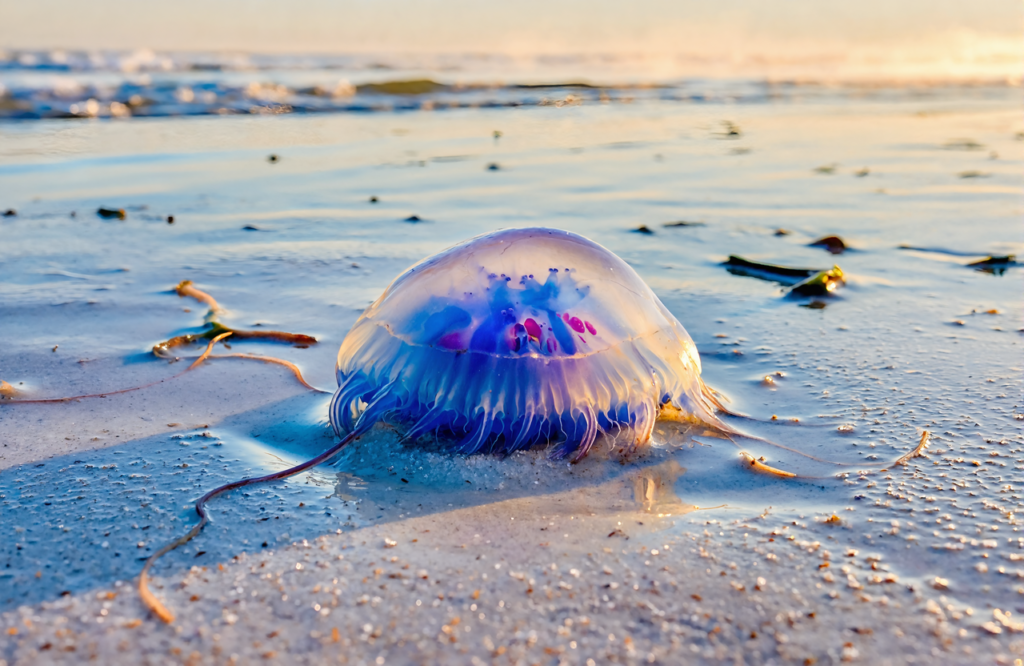
Which jellyfish sting on the Mississippi Gulf Coast?
The Gulf Coast has a handful of regular jellyfish, and only a couple pack a real punch. Knowing them helps you gauge how careful to be.
One warning that surprises people: a dead or washed-up jellyfish can still sting. The stinging cells fire on contact even when the animal is dead, so a man o’ war stranded on the beach is not a toy. Keep kids and curious dogs away from any blob on the sand.
When should you see a doctor for a jellyfish sting?
For a medical emergency, call 911. Most stings you can handle at home, but some need professional care, and a few are true emergencies.
Call 911 right away for any of these signs of a serious reaction:
- Trouble breathing or swallowing
- Swelling of the throat or tongue
- Chest pain
- Widespread hives or rash beyond the sting
- Dizziness, fainting, or muscle cramps
- Nausea or vomiting
Get seen the same day at a walk-in clinic if the sting is near an eye, the mouth, or the groin, if it covers a large area, if it’s on a young child or an older adult, if it came from a man o’ war, or if the pain just isn’t easing up. Watch the spot over the next few days too. Increasing redness, warmth, pus, or fever can mean an infection that needs treatment. Marine and puncture wounds count as dirty wounds, so CDC guidance points to a tetanus booster if it’s been five years or more since your last one.
Also worth knowing: a jellyfish rash can flare up again days or even weeks later. That delayed reaction is normal, though a doctor can help if it’s severe.
For most small, mild stings that are already improving within a few hours, home care is enough.
How can you keep kids safe from jellyfish?
Kids are more vulnerable to stings because they have smaller bodies for the same amount of venom, so a little prevention goes a long way. A rash guard or a thin swim shirt blocks the short stingers on many jellyfish, which is one of the easiest wins for a beach day.
A few simple habits help:
- Put kids in a rash guard or stinger suit, not just a swimsuit.
- Teach them never to touch a jellyfish on the sand, even a dead one.
- Check for beach warnings or flags before you get in.
- Keep an eye on little ones near the shoreline where washed-up jellyfish collect.
What makes a good walk-in option near the coast?
A good walk-in clinic for a bad sting is one that’s open when you actually need it, close to the water, and set up to handle a wound and watch for infection. That combination matters most in the hours and days after a sting, when you may want a professional to check a large or worrying spot.
Our clinic sits on Hwy 57 here in Vancleave, a quick trip for folks in Gautier, Ocean Springs, and Pascagoula. We take walk-ins every day, 7am to 7pm, with no appointment required. Our team can clean and check a wound, evaluate a skin reaction and prescribe medication if it’s needed, give a tetanus shot, and keep an eye out for infection in the days after. There’s an X-ray machine and a lab right here in the building, so if a visit turns up something that needs a closer look, we can handle it. We post self-pay prices up front too, with an office visit at $130 and an on-site X-ray at $75, and we take most major insurance plans. You can learn more about our walk-in urgent care and the full list of services online, or reach us through our contact page.
Frequently asked questions
No. This is a myth, and the CDC says so directly. Urine can actually irritate the sting. Rinse with seawater and use a hot-water soak instead.
Most mild stings ease over a few hours, with tenderness and itch fading over several days. Keep in mind a delayed rash can reappear days to weeks later, which is normal.
On the Mississippi Gulf Coast, use hot water. Mississippi Poison Control advises against vinegar for sea nettles and the National Park Service advises against it for man o’ war, our two common local stingers.
Yes. The stinging cells fire on contact even after the animal dies, so a washed-up jellyfish or man o’ war can still get you. Don’t touch them.
Most, like moon jellies and sea nettles, cause painful but manageable stings. The Portuguese man o’ war is the serious one, with tentacles up to about 30 feet, and its stings warrant same-day medical attention.
Call 911 for trouble breathing, throat or tongue swelling, chest pain, widespread hives, dizziness, fainting, or muscle cramps. These can signal a dangerous allergic reaction.
Close to the coast when you need us
If a sting needs more than home care, we’re close by. You’ll find Total Health Urgent Care at 12000 Hwy 57, Vancleave, MS 39565, a straight shot up Hwy 57 from Gautier and minutes from Ocean Springs and Pascagoula. Come in any day between 7am and 7pm, or give us a call at (228) 283-5045.
This guide was prepared by the Total Health Urgent Care team; our clinic was founded by Jennifer Duncan, APRN, MSN, FNP-C. For general medical information we’ve linked to trusted authorities such as the CDC and the Mississippi Poison Control Center. Think of this as background reading, not personal medical advice. In a medical emergency, call 911.