
Need urgent care for burns in Vancleave, Gautier, or Pascagoula? Red, sore, first-degree burns usually heal at home. A blistered burn, one that still hurts after 48 hours, or one showing signs of infection is worth a prompt visit. Total Health Urgent Care lists minor burn care on its services page and takes walk-ins every day, opening at 7 AM and staying open until 7 PM. Large, deep, chemical, or electrical burns call for 911, and any burn to the eyes, mouth, hands, or genitals, or a blistered burn on the face, feet, groin, buttocks, or a major joint, needs emergency care.
- Home care usually works: skin that’s red and painful with no blisters. The American Academy of Dermatology notes that most first-degree burns heal by themselves, but it sends a very large one, or one on an infant or an elderly person, to the emergency room.
- Walk in: a small blistered burn away from the eyes, mouth, hands, feet, groin, buttocks, and major joints; pain that lasts past 48 hours; pus, fever, or red streaks; or a last tetanus shot more than 5 years back. The AAD sends burns on infants and elderly people to the ER instead.
- ER or 911: a blistered burn on the face, feet, groin, buttocks, or over a major joint; a burn about the size of your palm or bigger; white or blackened skin; smoke breathed in; or any chemical or electrical burn.
- Price: a self-pay office visit costs $130, and most major health plans work here too.
Does urgent care treat burns?
Total Health Urgent Care treats minor burns, and our services page sums up the burn service in one line: “Rapid intervention of minor burns, including prescribed treatment and wound care. Referral if needed.” Minor burns also show up on the “What we treat” list on our Vancleave urgent care page.
So what makes the best urgent care for a burn near Gautier or Vancleave? You want hours that cover the moment it happens, even on weekends. You want a clinic that can handle the tetanus question and treat an infection that shows up days later. And you want the price posted where you can see it ahead of time. Our Hwy 57 clinic keeps 7 AM to 7 PM hours all week, lists tetanus shots and infection treatment among its services, and publishes a $130 self-pay office visit. Jennifer Duncan, the nurse practitioner behind this independent clinic, carries APRN, MSN, and FNP-C credentials, plus 25-plus years working emergency and urgent care.
Which burns can you treat at home?
Superficial burns, the ones people still call first-degree, can usually be handled in your own kitchen. MedlinePlus’s burns article counts first-degree burns anywhere on the body, plus second-degree burns less than 2 to 3 inches wide, as minor burns, adding that minor burns “will often heal without further treatment.” The same article treats second-degree burns on the hands, feet, face, groin, buttocks, or over a major joint as major burns, whatever their size.
The middle column’s descriptions come from MedlinePlus’s burns article. The healing times come from Cleveland Clinic’s burns guide, which also explains why a deep burn can feel deceptively mild: full-thickness burns destroy nerve endings, so they don’t hurt. MedlinePlus adds that how much pain you have is unrelated to the level of burn, and that “The most serious burns can be painless.” So don’t judge a burn by how much it stings.
When do you need urgent care for burns?
Come in when a burn looks minor but isn’t acting like one. If a minor burn is still painful 48 hours later, MedlinePlus says to contact your health care provider, and signs of infection mean calling right away. The National Library of Medicine’s MedlinePlus lists those signs as drainage or pus from the burned skin, fever, increased pain, red streaks spreading from the burn, and swollen lymph nodes.
A few other good reasons to get it looked at:
- It blistered. The American Academy of Family Physicians’ patient handout, Caring for Minor Burns, says to “Call your doctor right away if you think your burn might be serious, if you have blisters, or if the area is very painful or does not heal quickly.”
- It isn’t getting better. Cleveland Clinic advises medical care when a burn isn’t improving within a few days or looks worse, or when acetaminophen or ibuprofen don’t touch the pain.
- Your tetanus shot is out of date. MedlinePlus’s minor burns aftercare instructions say burns are susceptible to tetanus and tell you to contact your provider if your last tetanus shot was more than 5 years ago. Tetanus shots appear on our services page, and our tetanus shot guide explains how that evaluation works.
- The person burned is at higher risk. Children, older people, and people with weakened immune systems should be seen right away, the same MedlinePlus article advises. The AAD’s minor-burn guide goes further for the very young and very old: if the victim is an infant or an elderly person, it says to go to an emergency room immediately.
Which burns need an emergency room?
For a medical emergency, call 911. Reasons to make that call after a burn, per MedlinePlus, include a burn that’s very large, about the size of your palm or larger; a full-thickness burn; not being sure how serious it is; a burn caused by chemicals or electricity; signs of shock, such as pale and clammy skin, weakness, or blue lips; or breathing in smoke.
Location matters as much as size. The American College of Emergency Physicians puts it plainly on its Know When to Go burns page: “Seek emergency care for more serious burns and for any burns to the eyes, mouth, hands, and genital areas, even if mild.” The same ACEP page says that for chemical and electrical burns, you should call 911 or your local emergency number. The American Burn Association’s referral guidelines for clinicians include all chemical injuries and all patients with suspected inhalation injury, and they estimate burn size with the palm, since a patient’s entire palmar surface is about 1% of total body surface area.
For the rows that say to contact your provider, that can be as simple as walking in to Total Health. Still not sure how serious it is? MedlinePlus says to treat it as a major burn. Our guide to urgent care vs. the ER goes deeper on the difference.
How do you treat a minor burn right away?
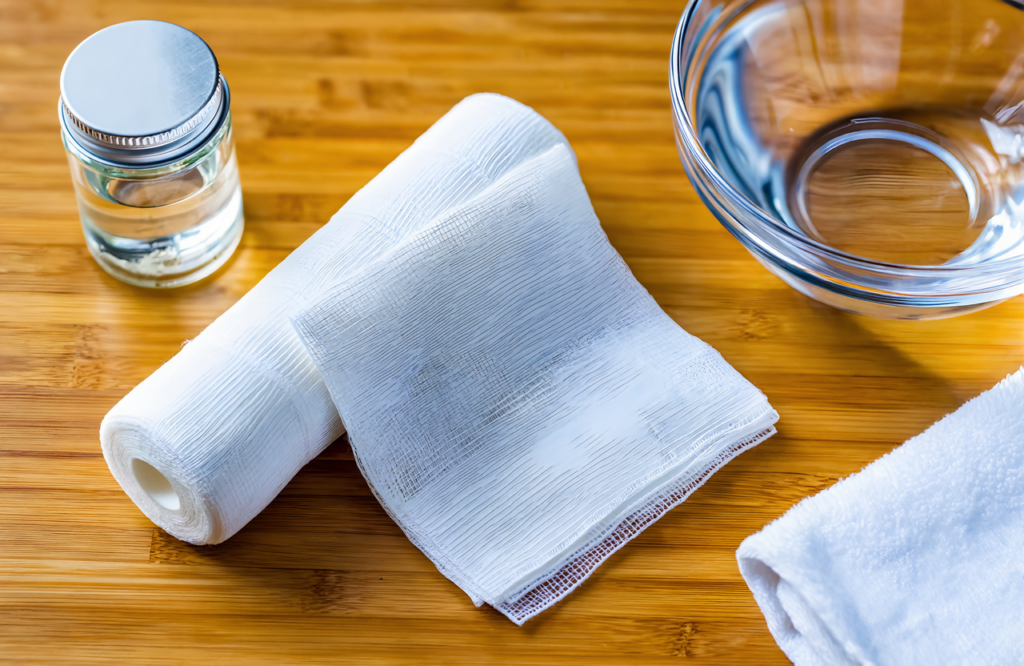
Cool a minor burn, cover it, and leave any blisters alone. That’s how to treat a burn at home when it’s minor, and the AAD’s step-by-step guide for a first-degree, minor burn spells it out below. ACEP’s burns page adds one about rings and jewelry.
- Cool the burn. AAD: “Immediately immerse the burn in cool tap water or apply cold, wet compresses. Do this for about 10 minutes or until the pain subsides.”
- Get rings and tight clothing off. ACEP says to remove jewelry or tight clothing from around burned areas and apply a clean bandage. Leave anything that’s stuck to the skin alone, though, since MedlinePlus warns not to remove clothing that is stuck to the skin.
- Use petroleum jelly. AAD recommends applying it two to three times daily.
- Cover it. AAD’s instruction is to “Cover the burn with a nonstick, sterile bandage.” The MedlinePlus aftercare page adds two tips: skip any dressing that sheds fibers, since they can get caught in the burn, and change the dressing once a day.
- Treat the pain. AAD notes that acetaminophen or ibuprofen can help relieve the pain and reduce inflammation.
And skip the kitchen-cabinet remedies! Petroleum jelly aside, AAD warns against ointments, toothpaste, or butter on a burn, “as these may cause an infection.” MedlinePlus’s aftercare page also rules out cream, lotion, oil, cortisone, butter, and egg white, while allowing a thin layer of petroleum jelly or aloe vera. Ice is out too. Cleveland Clinic says ice can actually make the burn worse.
Should you pop a burn blister?
Leave a burn blister alone. The AAD’s advice is to “let them heal on their own while keeping the area covered. Do not pop the blisters.” MedlinePlus gives the reason in its aftercare instructions: an opened blister can get infected. Dermatologist Shilpi Khetarpal, MD, put it this way in a Cleveland Clinic article on blisters: “Blisters are your body’s way of forming a bandage after an injury.”
Watch what’s inside, though. ACEP lists a blister filled with greenish or brownish fluid among the burn symptoms that call for immediate medical attention, along with fever, pus-like or foul-smelling drainage, and excessive swelling. A blistered burn over a knee, elbow, or another major joint is a different story too, since MedlinePlus counts second-degree burns over a major joint as major burns.
What about grease, steam, and oven burns?
A minor steam burn, grease burn, or oven burn gets the same treatment as any other minor burn: cool it, cover it, and watch for blisters. The emergency rules above still apply, so a kitchen burn to the eyes, mouth, hands, or genitals needs emergency care even if it’s mild. Each kind of kitchen burn also has its own trap.
- Steam and hot liquids: MedlinePlus ranks scalding from steam or hot liquids as the second most common cause of burns, right behind fire and flame. ACEP warns, “It only takes one second of contact with human skin to cause a serious burn if a liquid is over 160° F.”
- Oven racks, pans, and curling irons: AAD says first-degree burns frequently happen after someone accidentally touches a hot stove, curling iron, or hair straightener.
- Grease: the bigger danger is a pan fire. A holiday cooking safety release from the U.S. Consumer Product Safety Commission says, “If a grease fire starts, smother the flames by sliding a lid over the pan and turning off the burner. Never use water on a grease fire.” ACEP’s burns page notes that with cooking fires, most people are injured trying to put out the fire themselves.
Why are the holidays a risky time for kitchen burns?
Holiday cooking is the reason. The U.S. Consumer Product Safety Commission’s November 19, 2025 release says the holiday season “marks the most dangerous time of year for cooking-related fires and injuries.” The National Fire Protection Association’s Cooking Fire Facts and Figures says cooking is the leading cause of reported home fires, home fire injuries, and home fire deaths in the United States. It calls Thanksgiving the day with by far the most cooking fire incidents of any day on the calendar. The CPSC release puts a number on it: “Cooking fires spike on Thanksgiving Day, with an average of 1,400 cooking fires. That’s more than three times the daily average of cooking fires.” This year, Thanksgiving falls on Thursday, November 26. Closer to home, last year’s Thanksgiving cooking release from the Mississippi Insurance Department, dated November 18, 2025, put it this way: “At last check, there have been 60 fire deaths statewide in 2025. Cooking or the misuse of cooking equipment led to four of those deaths.”
If your family fries the turkey, CPSC’s COOK reminder applies: carefully follow the manufacturer’s instructions, never overheat the oil, never overfill the fryer, and keep it out of the garage, off the deck, and away from the house.
Kids are the ones to watch. ACEP’s burns page cites Safe Kids Worldwide’s count of 300 children treated in emergency departments for burn injuries every day, and our kids urgent care guide covers bringing a child to see us. CPSC’s holiday tips say to keep children and pets at least three feet away from the cooking area and to turn pot handles inward. For Halloween on October 31, the American Academy of Pediatrics’ Halloween safety tips suggest lighting jack-o’-lanterns with a battery-operated flameless candle, a flashlight, or a glow stick, and checking costume labels for “flame resistant.”
Serious burns tend to happen close to home, too. Drawing on burn center admissions from 2020 to 2024, the American Burn Association’s burn incidence fact sheet reports that 61% of burn incidents happen at private residences, citing its 2025 Burn Injury Summary Report.
What does urgent care do for burns, and what does it cost?
At Total Health in Vancleave, a burn visit pairs the office-visit exam with the wound care and prescribed treatment our services page describes, plus a referral when the burn calls for more than a clinic can offer. The same visit can cover the tetanus check, since our tetanus service starts with an injury evaluation and a look at your immunization history. If the burn gets infected later, infections are on our services list too, with prescribed medication based on the infection type.
Paying out of pocket? Our pricing and insurance page puts a $130 price on a self-pay office visit, and that price takes in the exam, any referral, and any prescription the provider writes. Have insurance? Total Health accepts most major plans and bills the insurance company directly, so pack your primary card and any secondary card. Because the clinic offers a long list of services, it’s smart to phone (228) 283-5045 ahead of your visit if you want an exact self-pay number.
Frequently asked questions
Often, if it’s small. MedlinePlus counts second-degree burns less than 2 to 3 inches wide as minor burns, and Total Health’s services list includes minor burn care with referral when needed. A larger second-degree burn, or one on the hands, feet, face, groin, buttocks, or a major joint, counts as a major burn. MedlinePlus says major burns need urgent medical care, and ACEP advises emergency care for any burn to the hands, even a mild one.
Up to three weeks for a partial-thickness burn, according to Cleveland Clinic, which puts superficial burns at a few days. ACEP’s burns page lists a burn that doesn’t heal in 10 days to two weeks among the signs to get medical attention, so a slow one is worth a check before the three-week mark.
It can. MedlinePlus’s minor burn aftercare page says burns are susceptible to tetanus and advises contacting your provider if your last tetanus shot was more than 5 years ago. Our Vancleave services list includes tetanus shots, starting with an evaluation of the injury.
MedlinePlus lists drainage or pus from the burned skin, fever, increased pain, red streaks spreading from the burn, and swollen lymph nodes. Any one of them is a reason to reach your provider right away, according to MedlinePlus.
Yes! Weekend hours match weekday hours at Total Health, 7 AM until 7 PM, and there’s no appointment required.
Paying yourself, the office visit runs $130 at Total Health, and the exam, referrals, and prescriptions are part of that price. With such a long service list, the clinic recommends calling (228) 283-5045 before your visit for an exact out-of-pocket estimate.
Walk in for burn care in Vancleave
Splashed hot coffee on your forearm, or caught a puff of steam from the pressure cooker? Run it under cool water, then head our way. 12000 Hwy 57, Vancleave, MS 39565 sits on the Hwy 57 corridor, close to Gautier, Ocean Springs, and Pascagoula, and the clinic also sees patients from Moss Point, D’Iberville, and Biloxi. Searching for urgent care near me open now? If it’s between 7 AM and 7 PM on any day of the week, we are. Got a question before you drive over? Call (228) 283-5045.
This burn guide was prepared for Gulf Coast families by Total Health Urgent Care’s own Vancleave team. Clinic founder Jennifer Duncan carries the APRN, MSN, and FNP-C credentials. It’s general information, not a diagnosis, and for a medical emergency, call 911.